It's been unbelievably hot and dry this summer in Arkansas, just replace Arkansas with your state, I know we aren't the only ones. Too hot to get out and do much but a trip over to the Ponca area in Madison County was just what I needed. As hot and dry as it's been, the Boxley Valley was surprisingly green. Canoe trips are at a standstill until we get some rain, but there are plenty of activities. All along the mountains are beautiful cabins to rent for a vacation you'll never forget. The Canopy Line Tours have zip lines that let you get up close and personal with tree tops and just up Highway 43, there are herds of Rocky Mountain Elk that live along the Buffalo River in protected wildlife areas. You can read more about them HERE.

Just past the Ponca low water bridge is the cabin that trapper "Beaver Jim" Villines built for his bride in 1850. The simple one room cabin stands as a testament to the pioneers who braved the wilderness to farm the rich bottomland along the White River.

Travel was next to impossible over winding dirt roads and the unpredictable high waters of the river, so there were few travelers through these hills. The settlers of the Ozarks made their own way, survival or die. For that reason Ozark people are a tough bunch, passing down from one generation to the next possessions and traditions.


Abraham Villines and his children were among the first pioneer families in the Buffalo River valley. Abraham's grandson William built this log house in 1850 for his new bride, Rebecca. Four years later their son James was born here.
James Villines (1854-1948) was known as "Beaver Jim" for his renowned trapping ability. After his marriage in 1880, he moved from this home to his own farmstead across the Buffalo River.
In the mid-twentieth century, Villines family descendants used this house as a barn - with the chimney still attached. Today, the notched and hand-hewn logs recall the pioneers who carved their homes out of the Buffalo River wilderness.
James Villines (1854-1948) was known as "Beaver Jim" for his renowned trapping ability. After his marriage in 1880, he moved from this home to his own farmstead across the Buffalo River.
In the mid-twentieth century, Villines family descendants used this house as a barn - with the chimney still attached. Today, the notched and hand-hewn logs recall the pioneers who carved their homes out of the Buffalo River wilderness.


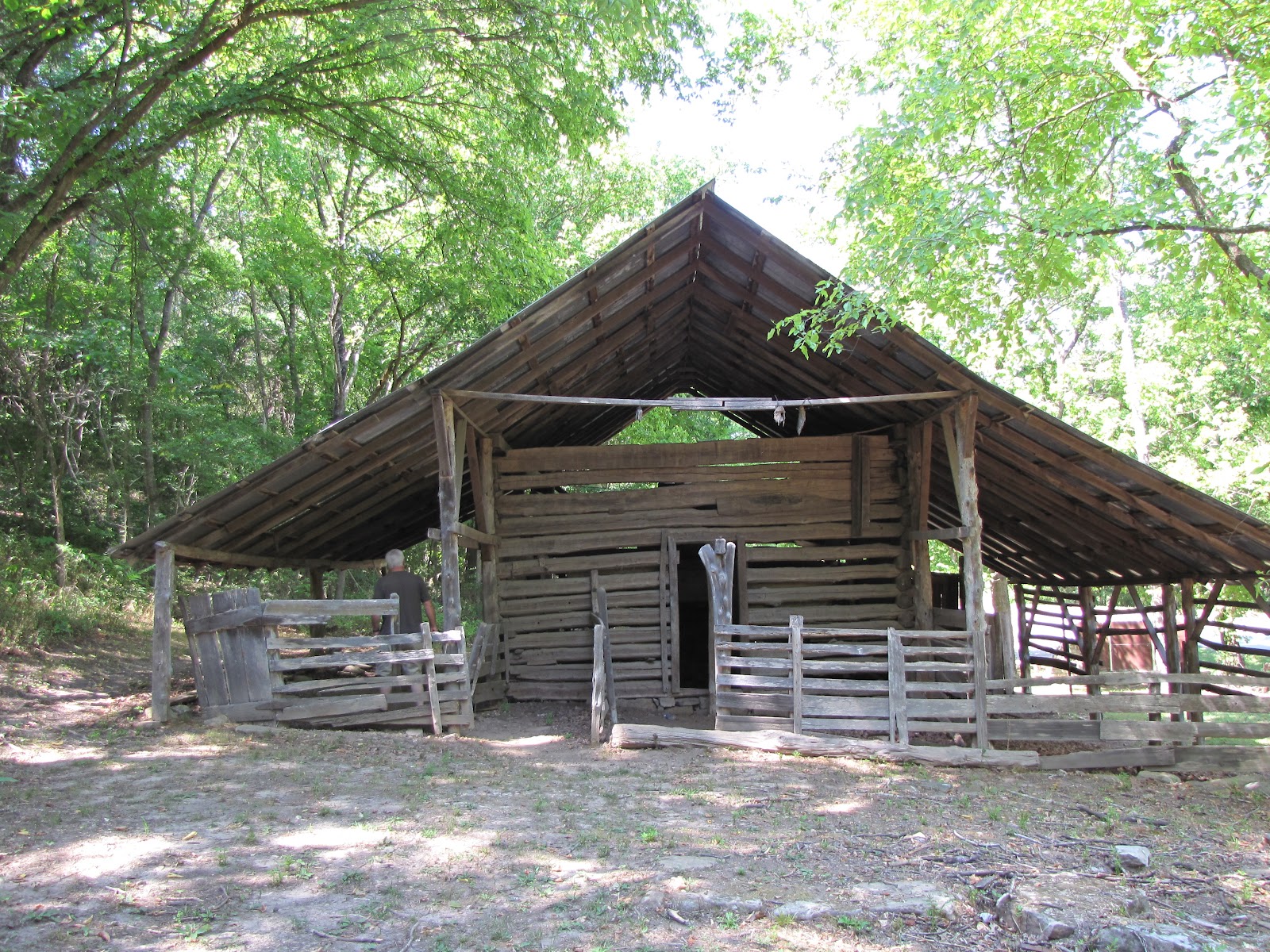

The chicken house and hog pen still stand at the back of the old homeplace.

The rough mountains are still here, all around the cabin.

132 years old and the stonework on the chimney is still mostly there, amazing!

You can see the workmanship it took to build this cabin has stood the test of time.


If you're planning a trip to Arkansas, think about adding this area. If you Google, you'll see some really breathtaking pictures... mine simply cannot do credit to the beauty of the Buffalo River!


.png)