I could close my eyes and make the drive to Harrison, the curvy road takes me through Huntsville and Marble, Alpena and Bear Creek Springs. All "just wide spots in the road" as Daddy used to say. Many family members have called Harrison home for 5 generations now. Both Mom and Dad were natives of Boone County and loved living there.
It's one of those old southern towns that still has a thriving square, people come and shop, waving hello to friends they spot in the courtyard. The Boone County Courthouse has been there since 1908, replacing the first one (built in 1870) that burned. That's tradition, that's commitment, that's love of community.
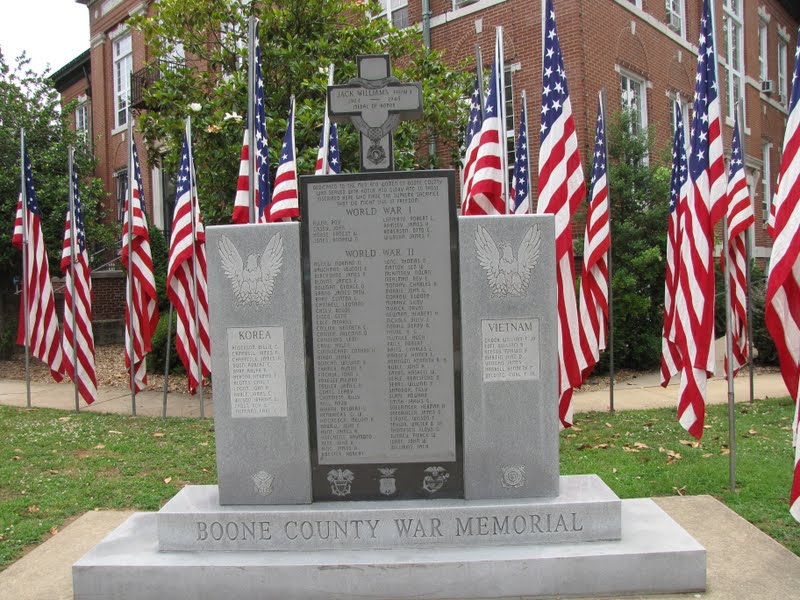
Small towns like Harrison somehow find the money to fund their budget, take care of roads and build monuments to honor those who have served their country. Daddy was one of those men.
The old Lyric where we watched Rosemary's Baby and True Grit was right there, untouched by the past 40 years thanks to the hard work of the
Ozark Arts Council. Sheer luck put us in the right place at the right time and Vive Allen was kind enough to give us our own personal tour of the old Lyric Theater.
From the moment we walked in the door, the memories of that place were everywhere! Jeff Christenson flipped on the lights at the old concession stand and it was like stepping back in time.
The seats, the stage, the screen... all the same. Even the clock on the wall advertising Lena Frances Flower Shop where I worked was still there!
One of the most fascinating things about the Lyric's history are the murals on the walls of the auditorium. Painted by hobos, they were done during the Great Depression in exchange for food and shelter.
In America, the true hobo was basically a hard working man of many trades and many talents who wandered the country in search of work. He laid and repaired railroad track, harvested wheat, cut down trees, mined for gold, herded cattle, built bridges and then moved on. When the Depression hit this country and the times swung from prosperous to destitute, these hard times produced the hobo that we often think of today.
Seven rows back, four seats over... that's where we held hands almost every Saturday night!