Friday, July 20, 2012

"Beaver Jim" Villines Cabin

It's been unbelievably hot and dry this summer in Arkansas, just replace Arkansas with your state, I know we aren't the only ones. Too hot to get out and do much but a trip over to the Ponca area in Madison County was just what I needed. As hot and dry as it's been, the Boxley Valley was surprisingly green. Canoe trips are at a standstill until we get some rain, but there are plenty of activities. All along the mountains are beautiful cabins to rent for a vacation you'll never forget. The Canopy Line Tours have zip lines that let you get up close and personal with tree tops and just up Highway 43, there are herds of Rocky Mountain Elk that live along the Buffalo River in protected wildlife areas. You can read more about them HERE

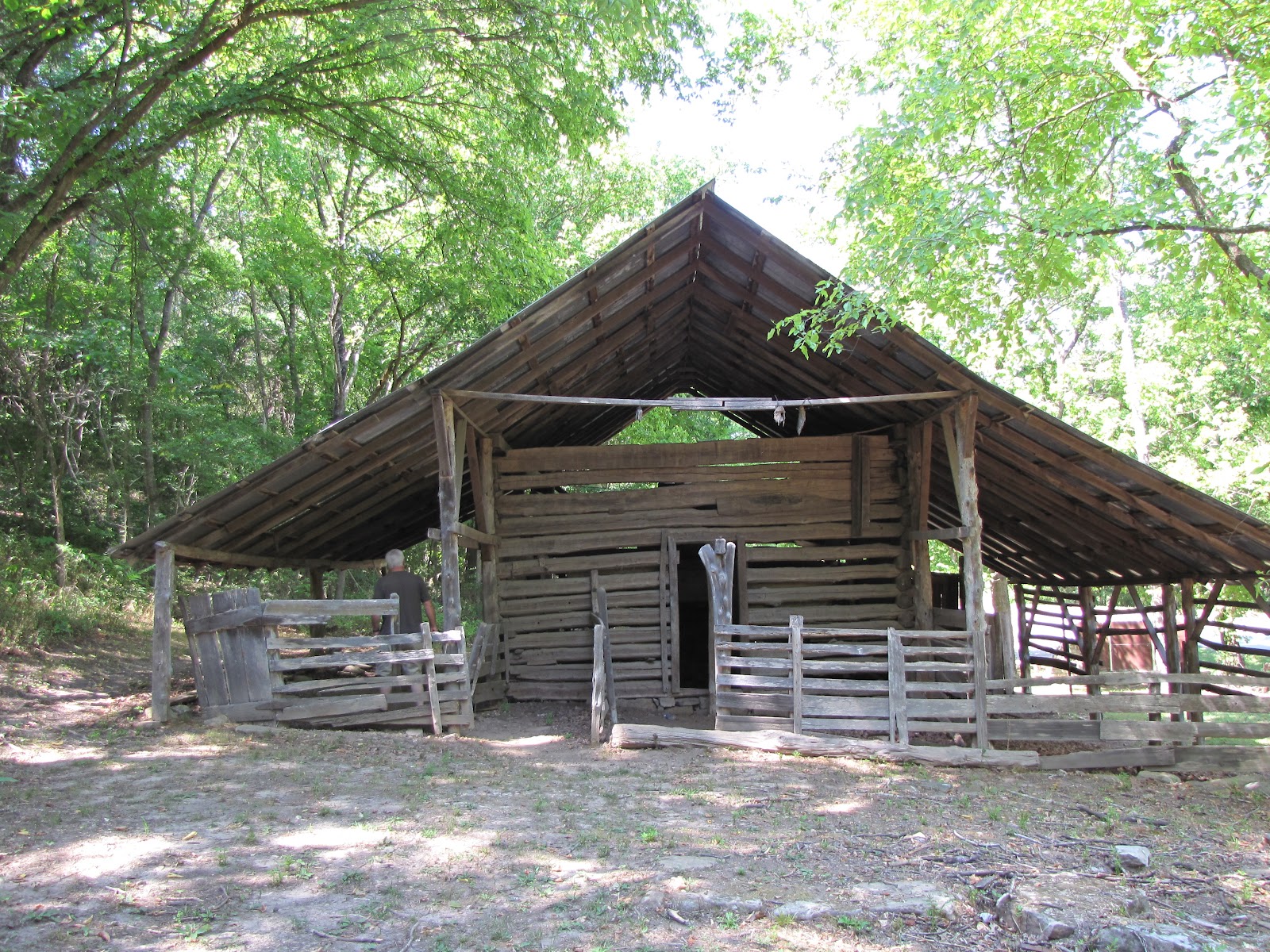
Just past the Ponca low water bridge is the cabin that trapper "Beaver Jim" Villines built for his bride in 1850. The simple one room cabin stands as a testament to the pioneers who braved the wilderness to farm the rich bottomland along the White River.  

Travel was next to impossible over winding dirt roads and the unpredictable high waters of the river, so there were few travelers through these hills. The settlers of the Ozarks made their own way, survival or die. For that reason Ozark people are a tough bunch, passing down from one generation to the next possessions and traditions. 


Abraham Villines and his children were among the first pioneer families in the Buffalo River valley. Abraham's grandson William built this log house in 1850 for his new bride, Rebecca. Four years later their son James was born here.

James Villines (1854-1948) was known as "Beaver Jim" for his renowned trapping ability. After his marriage in 1880, he moved from this home to his own farmstead across the Buffalo River.

In the mid-twentieth century, Villines family descendants used this house as a barn - with the chimney still attached. Today, the notched and hand-hewn logs recall the pioneers who carved their homes out of the Buffalo River wilderness.


The chicken house and hog pen still stand at the back of the old homeplace.

The rough mountains are still here, all around the cabin.

132 years old and the stonework on the chimney is still mostly there, amazing!

You can see the workmanship it took to build this cabin has stood the test of time.


If you're planning a trip to Arkansas, think about adding this area. If you Google, you'll see some really breathtaking pictures... mine simply cannot do credit to the beauty of the Buffalo River!  


Thursday, July 19, 2012

The "D" Word

How bad is it? Well, the 2012 drought is now being compared to the 1930's when year after year of hot, dry weather affected most of the country. During those "Dust Bowl" years, from Colorado to Kansas, into Oklahoma and Texas, farmers who already made as little as $145 a year were unable to grow any crops. For many there was nothing left to do but move, leaving behind their farms.  That's what happened to my Mom's family. Her Aunts and Uncles were forced to make the decision to move to California for a chance to start over with better wages and rain, precious rain. Mom's parents stayed and withstood years of failed crops before things got better. Coupled with the Depression it was and understatement to say, "Times were hard." 


According to a Weather Channel report, the 2012 drought affects nearly 61% of the country and ranks among the 10 largest droughts that we've seen in the past century. In Arkansas farmers are feeding their livestock hay that's earmarked for winter since there's no longer grass in the pastures. For many, the writing on the wall is too plain... they've had to sell off their cattle and hogs. With grain up 35%, there is little profit to be made on an already depressed market. One of the things that I can remember my Grandma doing everyday was write the weather down on the calendar. She would write the temps and whether the day was sunny or rainy, breezy or still, sultry or frigid. I always thought it was because it filled the day with purpose. Now I realize it was because they suffered through the Dust Bowl. She and Grandpa no doubt had a fear of hard times returning.

So why do farmers stay farmers? It's not like it's a glamorous job. The hours are long and we already know paydays are not that great.

It has to be a love of the land, pure and simple. 

Learned from childhood, deep inside.

Along the way, the paybacks come... just not always on a check!


Tuesday, July 17, 2012

When the Presbyterians Came to Kingston


Sometimes you get an education in the place you least expect. Last Friday's trip over to the beautiful Boxley Valley was more than I anticipated, behind this door at Grandpa's Flea Market on the square at Kingston was a piece of history that has almost faded away. Without the diligence of John D. Little and his daughter Janet Musteen, we might have missed this interesting piece of Arkansas history altogether.

Some people are storytellers, they may have done many things in their life, but they were destined to be the Keepers of Memories. Janet Musteen is one of these. She shared so much with us while we in her Dad's store on Friday. We missed Mr. Little by just a few minutes, he still comes by the store every few days even though he's 88. That's because part of his heart resides in the walls of that old store.

John D. Little and his wife traveled far in their married life since he was in the military, but retirement brought them back home to Arkansas. When daughter Janet could see he was bored with the sameness of everyday... she suggested he come down and run a little "garage sale" out of the old building. Reluctant at first, he finally showed up one day and enjoyed the visiting, bargaining and selling so much that he was hooked! Kingston may be a speck on the map but it holds a lifetime of memories and a chunk of Arkansas history that has almost disappeared.

Mr. Little co-authored "When the Presbyterians Came to Kingston" with Abby Burnett and Ellen Compton. The book documents a time when Mountain Mission Schools were being erected in the South by Northern religious denominations. They focused on the secondary education of white children, combining a common school education with vocational training. When the Kingston College was built in 1917, it was operated by the Reverend Elmer J. Bouher of the New York Presbyterian Church and subjects such as agriculture, blacksmithing, carpentry, printing and domestic science were taught along with an outreach program for local farm families. They also established the community's first medical clinic and worked diligently to battle moonshiners and bootleggers!

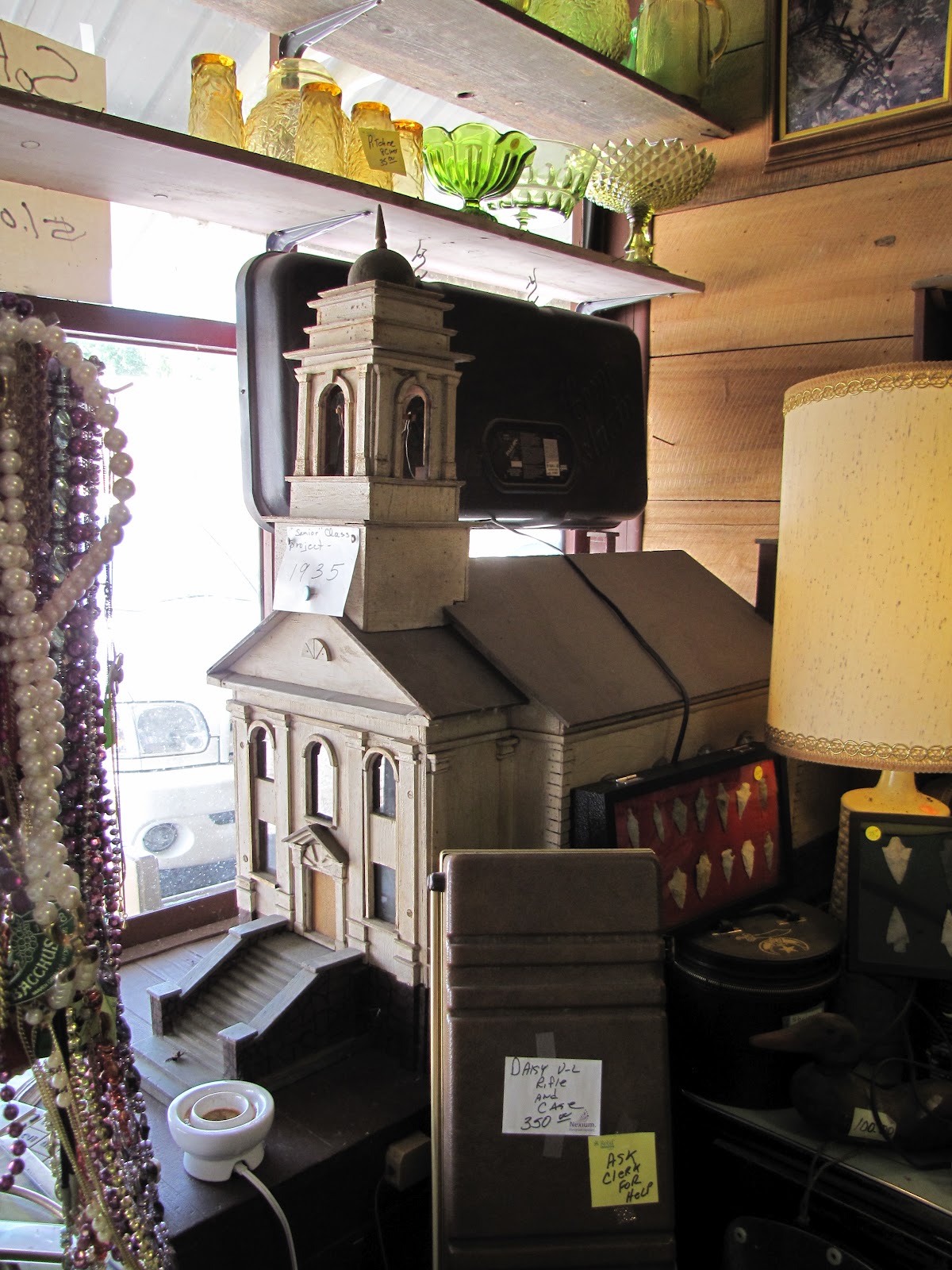
If you look closely at the pictures, you'll see the sheer size and grandness of this building. It was built as a church, used as a college, town hall and gathering place for the community of Kingston and rural Madison County from 1917 to 1951.


The Kingston College is long gone now, the victim of time and termites. All that remains are pictures, a book and this replica of the school built by a graduating Kingston class in 1935. 
Those with vision are wise enough to save the bits of our past.


Related Posts Plugin for WordPress, Blogger...